
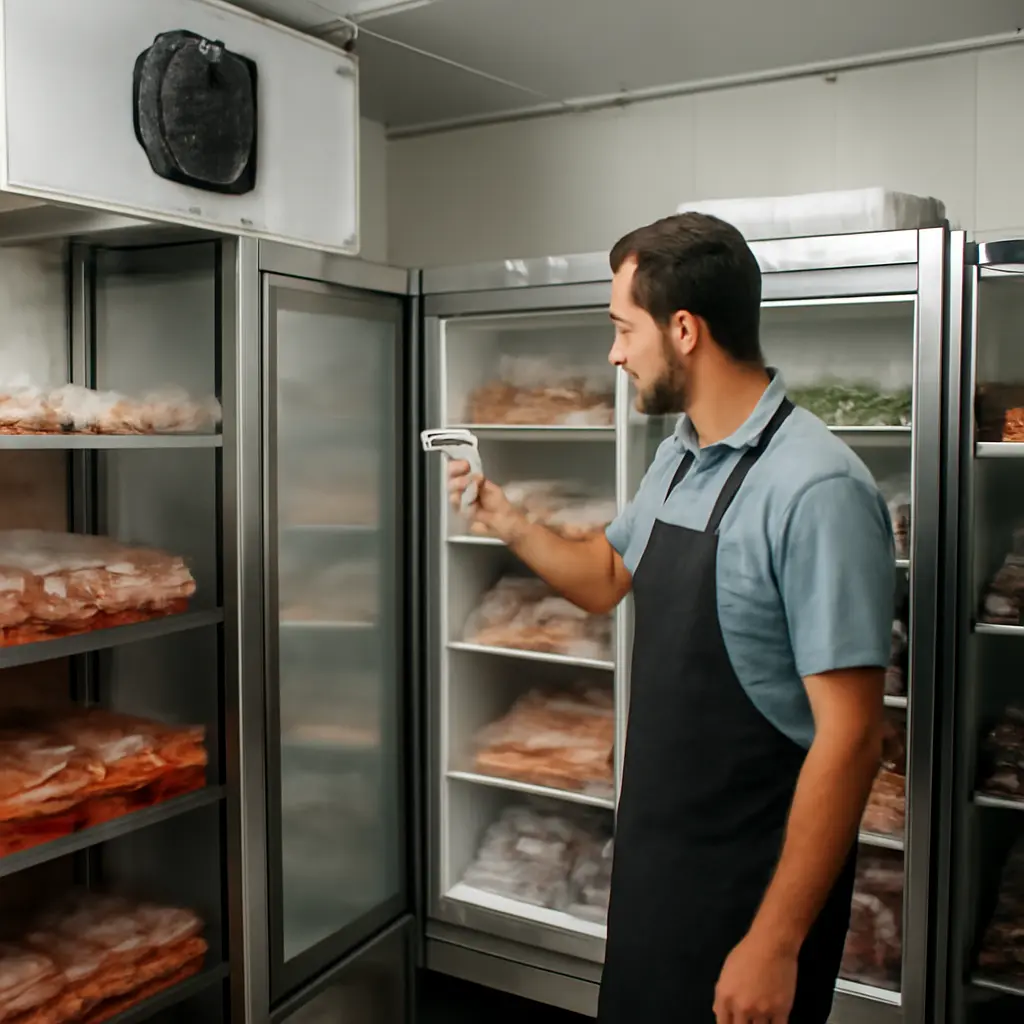
A supermarket’s food-safety system is the set of procedures, equipment, employee practices, and oversight used to reduce contamination and keep food at safe temperatures from delivery through sale. It works largely out of sight: receiving checks, refrigeration, cleaning, separation of raw and ready-to-eat foods, staff training, and traceability all help prevent hazards. The U.S. Centers for Disease Control and Prevention (CDC) estimates that foodborne illness causes about 48 million illnesses, 128,000 hospitalizations, and 3,000 deaths in the United States each year, making everyday prevention in stores consequential for shoppers and communities alike.
How food-safety controls protect supermarket food
The U.S. Food and Drug Administration (FDA) describes the Food Code as a model for safeguarding public health and ensuring food is unadulterated and honestly presented in retail and food-service settings. It is guidance for state, local, tribal, and territorial authorities—not a single federal retail rule applied identically everywhere. Many jurisdictions adopt it, sometimes with amendments, and local health departments inspect stores under their own laws.
In practical terms, a supermarket’s controls are preventive rather than dependent on spotting every unsafe item. They address biological hazards such as Salmonella and Listeria, chemical hazards such as cleaning-product residues, and physical hazards such as glass or metal fragments. The system is often organized around food-safety plans, standard operating procedures, employee training, and corrective actions when a check reveals a problem.
Receiving checks and supplier controls
Receiving controls are the inspections and records used when products arrive at the store. Employees may check delivery temperatures, packaging integrity, dates, signs of thawing or leakage, and whether refrigerated or frozen products have remained under appropriate conditions. Stores can reject damaged or temperature-abused shipments and document the decision.
These checks are one link in a longer supply chain. FDA preventive-controls rules require many food facilities to identify hazards and establish controls, while the Food Safety Modernization Act’s produce-safety standards set requirements for covered farms. Supermarkets may also set supplier specifications, review records, or use approved-supplier programs. Requirements differ by product and business, but the goal is the same: prevent a problem upstream from reaching shoppers.
Cold-chain temperature management
Cold-chain management means keeping perishable food within controlled temperatures during transport, storage, display, and handling. The FDA Food Code generally calls for cold holding at 41°F (5°C) or below and hot holding at 135°F (57°C) or above for time-and-temperature control for safety foods. Exact requirements and exceptions depend on the applicable jurisdiction and food category.
Stores maintain this control with walk-in coolers, refrigerated cases, freezers, calibrated thermometers, and temperature logs or electronic alarms. Staff may investigate a malfunction, move products to functioning equipment, assess how long food was exposed, and discard items when safety cannot be established. A display case that looks cold is not proof by itself; recorded measurements and corrective action make the control verifiable.
How supermarkets prevent contamination during handling
Temperature control limits the growth of many harmful microbes, but it cannot replace clean handling. The FDA Food Code therefore connects safe storage with employee hygiene, sanitation, equipment maintenance, and separation of foods that could contaminate one another. These controls are especially important in departments that cut, portion, cook, or repackage products on site.
Separation of raw and ready-to-eat foods
Cross-contamination occurs when harmful microorganisms or allergens transfer from one food, surface, or tool to another. Supermarkets reduce this risk by separating raw meat, poultry, and seafood from ready-to-eat foods; using dedicated or properly cleaned equipment; storing foods in an order that prevents drips from falling onto other products; and washing hands and changing gloves when tasks change.
The same principle applies between departments and during preparation. A slicer used for deli meats needs cleaning and sanitizing according to its schedule and whenever contamination or a product change requires it. Separate utensils and work areas can also help control allergens. Gloves do not make contaminated hands safe: they must be changed appropriately, and handwashing remains essential.
Cleaning, sanitizing, and employee hygiene
Cleaning removes food residue and dirt; sanitizing reduces microorganisms on cleaned food-contact surfaces to levels set by the applicable standard. Stores use written schedules for counters, cutting boards, slicers, sinks, and other equipment, while staff check that chemical sanitizers are mixed and used as directed. Cleaning tools themselves need attention so they do not spread contamination.
Employee health and hygiene rules are another barrier. The FDA Food Code includes provisions for handwashing, illness reporting, and restricting or excluding food employees in specified circumstances. Managers may require staff to report symptoms or diagnoses that could create a foodborne-illness risk, then follow local rules on reassignment, exclusion, and return to work. These procedures protect customers and coworkers while supporting consistent operations.
Food-specific controls in deli, bakery, and produce departments
Different foods require different controls. Deli departments manage ready-to-eat products, slicer sanitation, refrigeration, and preparation dates. Bakeries control ingredients, allergens, cooling, and handling after baking. Produce teams inspect incoming goods, remove damaged items, keep cutting tools and surfaces clean, and use safe water and handling practices for cut produce, which generally requires refrigeration.
For packaged foods, stores also check labels and packaging condition and follow instructions for refrigeration after opening where applicable. Allergen management matters because even a product that is microbiologically safe can harm someone if an undeclared allergen is present. FDA labeling rules identify nine major food allergens: milk, eggs, fish, crustacean shellfish, tree nuts, peanuts, wheat, soybeans, and sesame.
How inspections, traceability, and recalls support food safety
Daily store procedures are reinforced by outside oversight and the ability to act quickly when a hazard is found. Health inspections assess compliance with local food rules, while suppliers and regulators investigate problems that may affect products across multiple stores. Traceability helps identify which products came from where and where they were distributed.
Health inspections and food-safety records
Retail food inspections are conducted by state and local agencies in most U.S. jurisdictions. Inspectors may observe employee practices, examine temperature and sanitation conditions, review records, and check that required permits and procedures are in place. The FDA’s Retail Program Standards provide a framework for strengthening regulatory programs, but inspection frequency and public reporting vary by locality.
Records make routine controls easier to verify. Depending on the operation, they may include cooler temperatures, equipment maintenance, cleaning schedules, employee training, supplier information, and corrective actions. A record is useful only when it reflects what actually happened and prompts a response when a limit is missed.
Product traceability and recalls
Traceability is the ability to follow a food’s movement through relevant stages of production and distribution. The FDA Food Safety Modernization Act’s Food Traceability Rule establishes additional recordkeeping requirements for certain foods on the Food Traceability List. FDA has stated that the rule’s compliance date is January 20, 2026, subject to any subsequent agency action. The requirements do not apply to every food or every business in the same way.
When a supplier, regulator, or retailer identifies a potential hazard, stores can use product and shipment records to locate affected stock, remove it from shelves, and notify relevant parties. The FDA and U.S. Department of Agriculture’s Food Safety and Inspection Service publish recall and safety alerts for products under their respective authority. Shoppers should follow the notice’s instructions, which may include returning or discarding an item and cleaning surfaces it contacted.
A real-world illustration: Listeria and ready-to-eat foods
Listeria monocytogenes illustrates why supermarket controls must continue after cooking or processing. The CDC notes that Listeria can grow at refrigeration temperatures, unlike many other foodborne bacteria, and can cause severe illness, particularly among pregnant people, older adults, and people with weakened immune systems. Ready-to-eat foods such as deli products therefore require careful sanitation, refrigeration, and attention to recalls.
A recall involving a ready-to-eat product can trigger a chain of actions: the supplier identifies affected lots, retailers check inventory and sales records, stores remove matching products, and public agencies share warnings. This example shows why temperature control alone is not enough; sanitation, lot identification, communication, and rapid removal work together.
What shoppers can do to add another layer of protection
Supermarkets manage risks before food reaches the checkout, but safe handling continues at home. The FDA advises shoppers to select refrigerated and frozen foods near the end of the shopping trip, keep raw meat and seafood separate from other groceries, and refrigerate perishables promptly. The general household target is to refrigerate perishable food within two hours, or within one hour when the surrounding temperature is above 90°F (32°C).
- Check that chilled and frozen packages are intact and that refrigerated foods feel cold.
- Keep raw meat, poultry, and seafood separated from ready-to-eat foods in the cart and grocery bags.
- Follow package storage instructions and use a refrigerator set at 40°F (4°C) or below.
- Wash hands, utensils, and food-contact surfaces, and avoid washing raw poultry because splashing can spread germs.
- Check official recall notices, especially for products that may affect higher-risk household members.
Conclusion: food safety is a system, not a single checkpoint
Supermarket food safety depends on connected controls: suppliers and receiving checks, a reliable cold chain, separation of raw and ready-to-eat foods, sanitation, employee hygiene, inspections, records, and traceability. No single measure guarantees that every hazard is eliminated, but layered prevention makes contamination less likely and helps stores respond when a problem occurs. Shoppers can reinforce those protections by handling groceries carefully, refrigerating perishables promptly, and acting on recall alerts. For further guidance, consult the FDA Food Code, CDC food-safety resources, and your local health department’s inspection information.
Sources: Centers for Disease Control and Prevention, Estimates of Foodborne Illness in the United States, https://www.cdc.gov/foodborneburden/2011-foodborne-estimates.html; U.S. Food and Drug Administration, Food Code 2022, https://www.fda.gov/food/retail-food-protection/fda-food-code; U.S. Food and Drug Administration, Food Safety Modernization Act (FSMA), https://www.fda.gov/food/guidance-regulation-food-and-dietary-supplements/food-safety-modernization-act-fsma; U.S. Food and Drug Administration, FSMA Final Rule on Requirements for Additional Traceability Records for Certain Foods, https://www.fda.gov/food/food-safety-modernization-act-fsma/fsma-final-rule-requirements-additional-traceability-records-certain-foods; U.S. Food and Drug Administration, Retail Program Standards, https://www.fda.gov/food/retail-food-protection/fda-retail-program-standards; Centers for Disease Control and Prevention, Listeria, https://www.cdc.gov/listeria/about/index.html; U.S. Food and Drug Administration, Food Allergies, https://www.fda.gov/food/food-labeling-nutrition/food-allergies; U.S. Food and Drug Administration, Selecting and Serving Produce Safely, https://www.fda.gov/food/buy-store-serve-safe-food/selecting-and-serving-produce-safely; U.S. Food and Drug Administration, Are You Storing Food Safely?, https://www.fda.gov/consumers/consumer-updates/are-you-storing-food-safely


