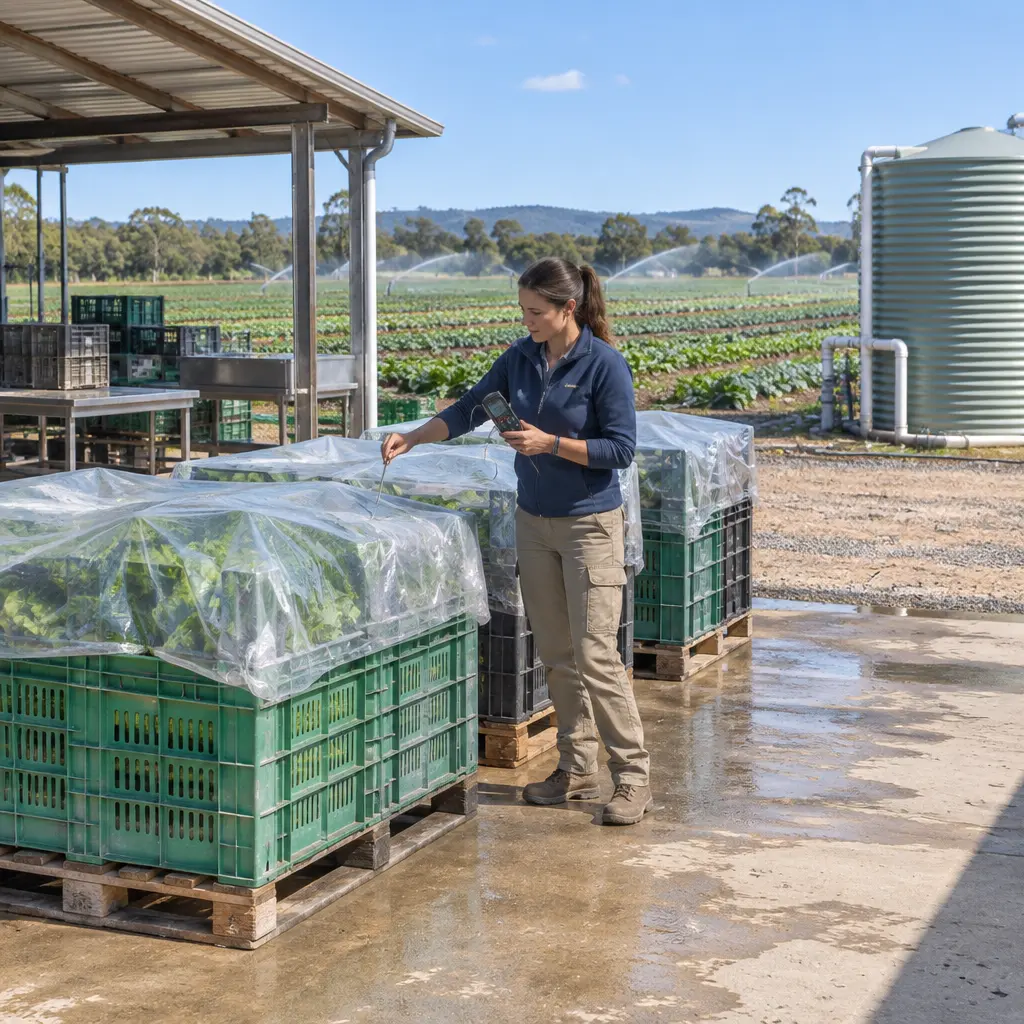
Climate change is increasing the food-safety risks posed by heat, flooding, drought, and shifting ecological conditions. Food safety means protecting food from biological, chemical, and physical hazards throughout production, processing, transport, and preparation. The World Health Organization (WHO) estimates that contaminated food causes about 600 million illnesses and 420,000 deaths worldwide each year. As temperatures and rainfall patterns change, hazards such as Salmonella, Vibrio, harmful algal toxins, and mycotoxins may become more difficult to predict and control. The evidence is strongest for particular hazards and regions; climate change does not affect every food or pathogen in the same way. This article explains the main pathways, summarizes documented examples and statistics, and outlines practical responses for public health and the food industry.
Climate Change and Food Safety: Definitions and Evidence
Climate change refers to long-term shifts in temperatures and weather patterns, driven primarily by human activities that emit greenhouse gases. Food safety risks are the chances that biological, chemical, or physical hazards in food will cause harm. The Intergovernmental Panel on Climate Change (IPCC) assesses climate-related risks to food systems, while the Food and Agriculture Organization of the United Nations (FAO) and WHO examine implications for food safety and public health. These frameworks connect changing hazards and exposure to the ability of food systems and communities to prevent, detect, and respond to contamination.
The scale of existing foodborne disease makes even modest changes consequential. WHO estimates that foodborne hazards cause 33 million years of healthy life lost annually, measured as disability-adjusted life years. Climate change may increase exposure in some settings, but risk depends on local weather, food production, infrastructure, sanitation, and control measures. It is therefore more accurate to describe climate change as a risk multiplier than as a single, uniform cause of foodborne illness.
Climate-sensitive food hazards
Climate-sensitive food hazards are contaminants whose occurrence, growth, survival, or movement can be influenced by temperature, precipitation, drought, or related environmental changes. They include bacteria and viruses, parasites, marine biotoxins, fungal toxins, and chemical contaminants mobilized by floods or fires. The FAO and WHO identify temperature, water availability, extreme events, and changes in ecosystems as important pathways that can alter food safety. A warmer environment can favor some microorganisms, but outcomes vary by organism and by the conditions in which food is grown, harvested, stored, and prepared.
Exposure, vulnerability, and adaptive capacity
Exposure describes contact with a hazard; vulnerability describes how susceptible people or systems are to harm; and adaptive capacity describes their ability to anticipate and manage risks. These concepts explain why the same weather event can have different food-safety consequences in different places. Flooding can contaminate crops or water, while its health impact depends partly on sanitation, refrigeration, monitoring, and access to safe replacement food. WHO’s global estimates establish the substantial baseline burden, but local surveillance is needed to determine whether and how climate trends change particular risks.
Climate Change Alters Biological Food Safety Risks
Biological hazards include disease-causing bacteria, viruses, parasites, and biological toxins. Climate conditions can affect their survival and growth in food, water, soils, and animal environments, as well as the timing and location of human exposure. The relationship is not simply “warmer means more disease”: pathogen biology, food handling, infrastructure, and public-health controls all matter. Several important pathways nevertheless warrant attention.
Heat and bacterial growth
Higher temperatures can increase the speed at which some foodborne bacteria multiply when food is held under favorable conditions. The U.S. Centers for Disease Control and Prevention (CDC) warns that bacteria multiply rapidly in the food “Danger Zone” of 40°F to 140°F (4°C to 60°C); perishable food should not be left at room temperature for more than two hours, or more than one hour when temperatures exceed 90°F (32°C). Hotter weather can make consistent refrigeration and safe transport more difficult, particularly during power failures or outdoor events. These handling risks are preventable through temperature control, rapid cooling, and safe cooking, even as climate conditions change.
Vibrio and warming coastal waters
Vibrio bacteria occur naturally in marine and brackish waters, and some species can cause illness when people eat contaminated seafood or have wounds exposed to seawater. The U.S. National Oceanic and Atmospheric Administration (NOAA) identifies water temperature, salinity, and other environmental conditions as factors influencing Vibrio occurrence. The U.S. Environmental Protection Agency (EPA) reports that observed coastal water temperatures have risen over the past century, although trends vary by location. Warmer waters can expand the season or areas in which certain Vibrio species are detected, but local monitoring is essential because salinity and other conditions also shape risk. Thoroughly cooking seafood and following public-health advisories remain important protections.
Flooding, irrigation, and crop contamination
Floodwater may carry sewage, animal waste, chemicals, or other contaminants onto fields and into wells and food-processing areas. The U.S. Food and Drug Administration (FDA) advises that crops exposed to floodwater may be adulterated and should not enter the human food supply unless a scientifically valid assessment establishes their safety. Heavy rainfall can also damage sanitation infrastructure and disrupt clean-water access. Drought presents a different challenge: reduced water availability may increase reliance on alternative or lower-quality irrigation sources, making water testing and treatment especially important. These contrasting hazards call for locally tailored water and crop controls rather than a single climate response.
Harmful algal blooms and seafood toxins
Harmful algal blooms occur when toxin-producing algae grow rapidly, sometimes contaminating shellfish and fish or making waters unsafe for recreation. NOAA describes water temperature, nutrient inputs, and other environmental conditions as factors that can influence blooms; climate change may alter bloom timing, duration, or geographic distribution in some regions. The resulting food-safety risk depends on the species involved and whether toxins accumulate in seafood. Because many marine toxins cannot be removed by cooking, shellfish-harvest monitoring and closures are crucial public-health measures.
Climate Change Affects Chemical and Environmental Food Hazards
Climate-related events can also affect chemical hazards by changing where contaminants move, how crops grow, and which pests or control methods are used. Chemical risks may develop gradually and can be difficult to identify without targeted testing. The main concerns include fungal toxins, contamination after extreme events, and changing agricultural conditions.
Drought, moisture stress, and mycotoxins
Mycotoxins are toxic substances produced by certain molds, including aflatoxins produced by some Aspergillus fungi. Drought, heat stress, insect damage, and moisture conditions during harvest and storage can influence mold growth and toxin formation, particularly in crops such as maize and groundnuts. The FAO and WHO recognize mycotoxins as significant food contaminants, but climate effects differ by crop, region, and stage of production; wet conditions can also promote mold in some contexts. Drying crops promptly, storing them at safe moisture levels, and testing high-risk commodities help limit exposure.
Wildfires, floods, and contaminant movement
Wildfires and floods can move contaminants into agricultural land, water supplies, and food facilities. Burned landscapes may produce ash and runoff that carry metals or other pollutants, while floods can distribute chemicals from damaged industrial sites, fuel stores, or waste systems. The presence of a contaminant does not automatically mean food is unsafe; risk depends on the substance, dose, route of exposure, and measured concentrations. Government agencies and food producers may need targeted sampling and risk assessment after major events before affected food or water is used.
Changing pests and pesticide pressures
Shifts in temperature and rainfall can change the ranges and seasonal activity of crop pests, potentially altering pesticide use and the likelihood of residues if products are misapplied. This is a conditional risk, not evidence that climate change necessarily increases pesticide residues in food. Residue limits, integrated pest management, application training, and routine testing remain the primary safeguards. Climate-informed pest surveillance can help producers choose controls suited to changing local conditions while protecting workers, consumers, and beneficial species.
Documented Examples and Risk Management
Observed cases illustrate how weather and food-safety controls interact. They also show why monitoring and preparedness are needed alongside emissions reduction: even when the climate contribution to a single incident cannot be isolated, extreme conditions can expose weaknesses in water systems, cold chains, and inspection capacity.
Seafood and coastal monitoring
The expansion and seasonal variability of Vibrio risks have prompted health agencies to emphasize coastal surveillance, seafood advisories, and rapid reporting of infections. NOAA and public-health agencies monitor environmental conditions and illness patterns because temperature alone does not predict every local event. For consumers, cooking seafood thoroughly and avoiding raw shellfish from closed or unapproved harvest areas reduce preventable exposure. People with chronic liver disease or weakened immune systems face a particularly serious risk from some Vibrio infections and should follow clinical and public-health guidance closely.
Farm and food-business preparedness
Food-safety plans can incorporate climate-related hazards through hazard analysis, water testing, sanitation procedures, backup power, and emergency communication. The FDA’s Produce Safety Rule establishes science-based standards for growing, harvesting, packing, and holding produce, including requirements related to agricultural water and worker hygiene. During heat waves, businesses can strengthen temperature logs and cold-chain checks; before floods, farms can protect wells and chemicals and establish procedures for assessing affected crops. These measures translate broad climate risk into operational controls.
Public-health surveillance and early warning
Surveillance combines illness reports, laboratory testing, food inspections, and environmental observations to detect changes and outbreaks. Linking health data with weather, water-quality, and crop information can help authorities identify emerging patterns, issue targeted advisories, and focus sampling where risk is changing. WHO’s foodborne-disease estimates describe the global burden, while national and local surveillance systems are needed to evaluate specific hazards. Clear communication is essential: alerts should explain which foods or locations are affected, what actions people should take, and when restrictions are lifted.
Conclusion: Building Climate-Resilient Food Safety
Climate change can reshape biological hazards such as bacteria, Vibrio, and algal toxins, while also affecting mycotoxins, water quality, and contaminant movement. The scale of foodborne illness identified by WHO underscores why these changes matter, but local outcomes depend on exposure, infrastructure, and preventive controls. Governments can strengthen surveillance and early warnings; farms and food businesses can protect water, maintain cold chains, and prepare for extreme events; and consumers can follow safe handling advice and public-health notices. Further reading from WHO, FAO, FDA, NOAA, and national health agencies can help communities identify the risks most relevant to their region and food supply.
Sources: World Health Organization, Food Safety fact sheet, https://www.who.int/news-room/fact-sheets/detail/food-safety; World Health Organization, WHO Estimates of the Global Burden of Foodborne Diseases, https://www.who.int/publications/i/item/9789241565165; Food and Agriculture Organization of the United Nations and World Health Organization, Climate Change: Unpacking the Burden on Food Safety, https://www.fao.org/3/ca8185en/ca8185en.pdf; Intergovernmental Panel on Climate Change, Climate Change 2022: Impacts, Adaptation and Vulnerability, https://www.ipcc.ch/report/ar6/wg2/; U.S. Centers for Disease Control and Prevention, About Food Safety, https://www.cdc.gov/food-safety/about/index.html; U.S. Environmental Protection Agency, Climate Change Indicators: Sea Surface Temperature, https://www.epa.gov/climate-indicators/climate-change-indicators-sea-surface-temperature; National Oceanic and Atmospheric Administration, Vibrio and Seafood Safety, https://www.fisheries.noaa.gov/; U.S. Food and Drug Administration, Flooding and Food Safety, https://www.fda.gov/food/food-safety-during-emergencies/flooding-and-food-safety; U.S. Food and Drug Administration, FSMA Final Rule on Produce Safety, https://www.fda.gov/food/food-safety-modernization-act-fsma/fsma-final-rule-produce-safety.