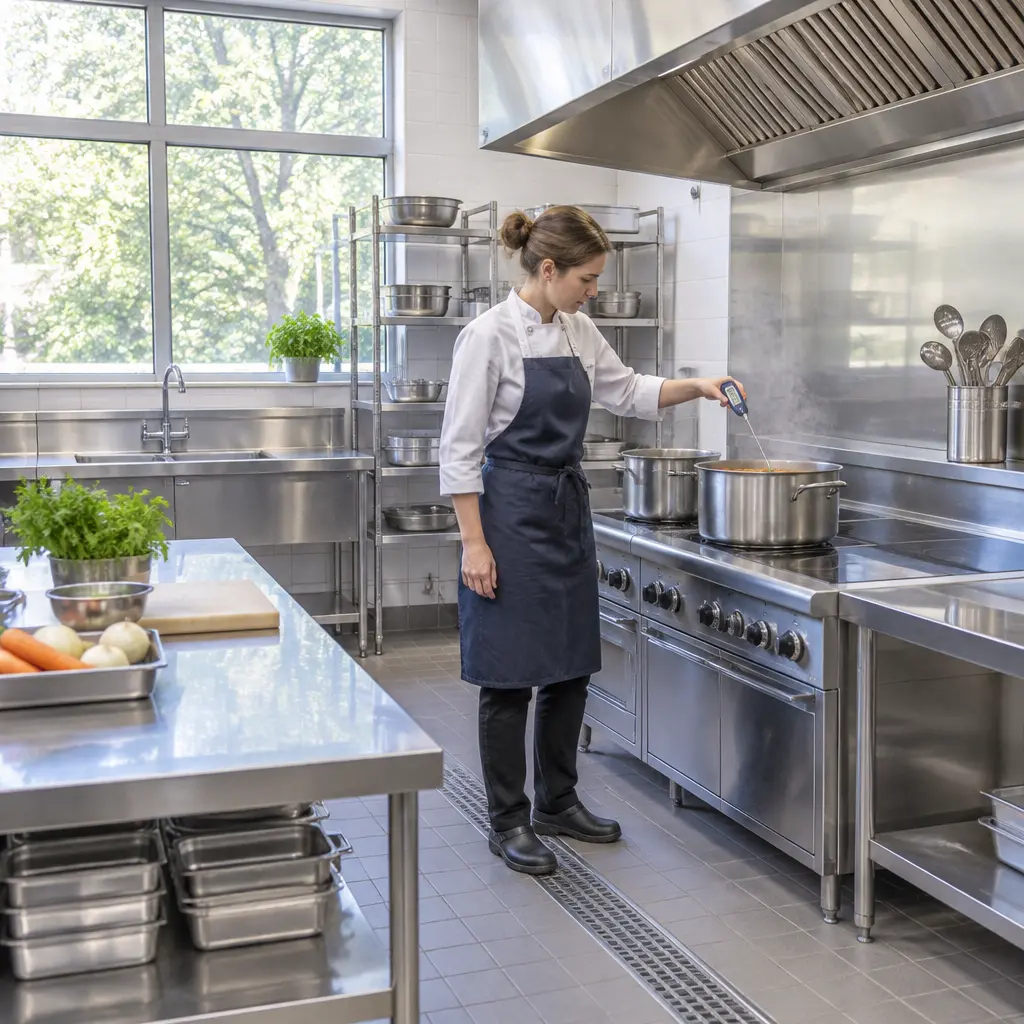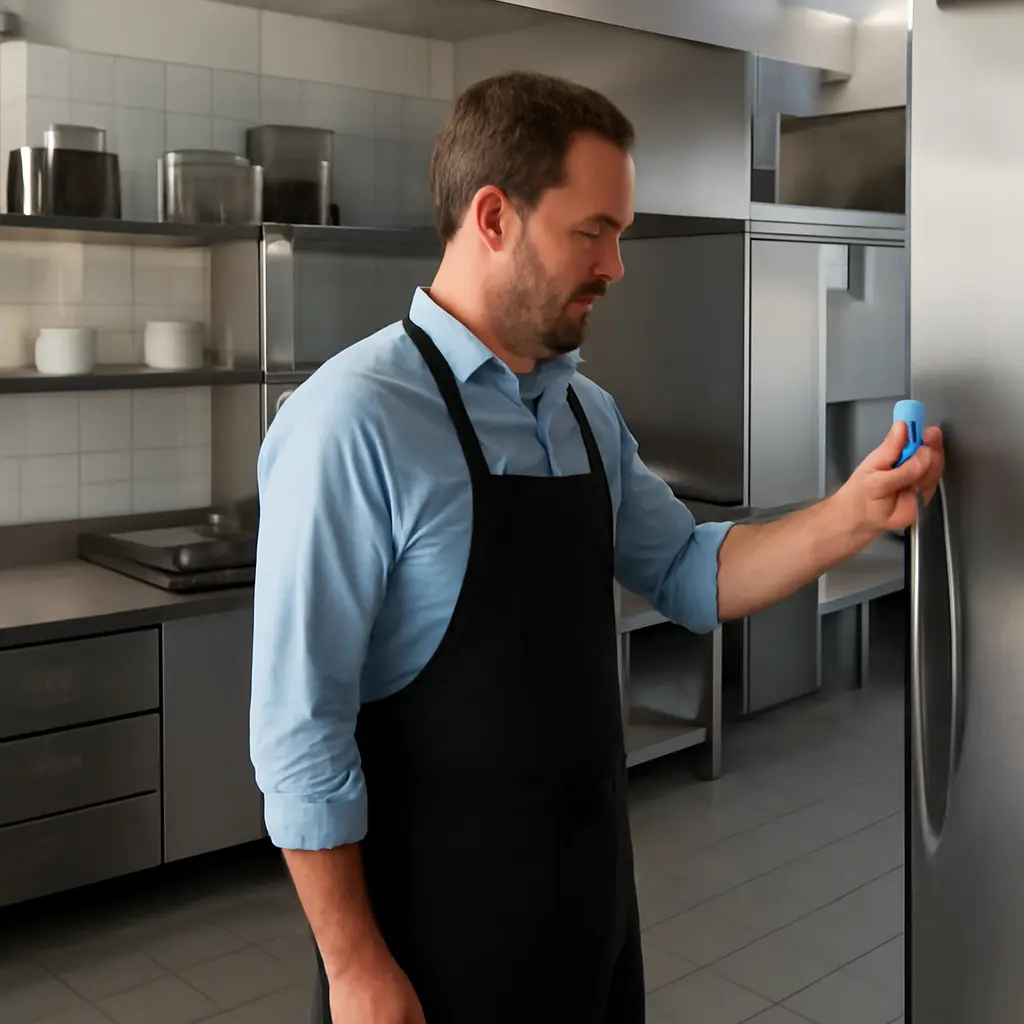
Restaurant temperature control is the monitoring and management of food temperatures during receiving, storage, preparation, cooking, cooling, and service. Its failures are rarely dramatic at first: a refrigerator running warm, a cooling pan left too deep, or a thermometer that has not been checked can let harmful bacteria grow without changing a food’s smell or appearance. The FDA’s 2022 Food Code sets widely used benchmarks—including cold holding at 41°F (5°C) or below and hot holding at 135°F (57°C) or above—while CDC estimates that foodborne illnesses affect 48 million people in the United States each year. Understanding where controls break down, how inspectors and managers verify them, and what workers can do when readings fail helps explain what diners seldom see behind the kitchen door.
Temperature Control Failures in Restaurant Food Safety
Temperature control failure means food or equipment falls outside the limits needed to reduce microbial growth or destroy pathogens, and the failure is not promptly detected and corrected. The FDA Food Code is a model code that jurisdictions may adopt or adapt; it is not automatically identical law everywhere. Local requirements can differ, so restaurants must follow the rules enforced where they operate.
Temperature is one part of time-and-temperature control. The FDA Food Code identifies time/temperature control for safety (TCS) food as food that needs controls to limit the growth of pathogenic microorganisms or the formation of toxins. Common examples include raw or cooked animal foods, cut melons, cut leafy greens, and certain cooked plant foods. A temperature reading is therefore meaningful only when managers also know what food it represents, how long it has been exposed, and which corrective action applies.
The public-health stakes are substantial. CDC estimates that foodborne diseases cause about 48 million illnesses, 128,000 hospitalizations, and 3,000 deaths in the United States annually. Those figures cover foodborne illness from all sources, not restaurant temperature failures alone; they show why preventive controls matter, rather than proving that any single temperature lapse caused a particular illness.
Cold holding and refrigeration failures
Cold holding keeps TCS food at 41°F (5°C) or below under the FDA Food Code model. A refrigerator’s display typically measures air or equipment conditions, not the temperature at the center of every food item. Overloaded shelves, blocked vents, frequent door opening, warm deliveries, or a faulty gasket can create uneven conditions even when a display appears reassuring.
The FDA Food Code allows specific alternatives under controlled conditions, including certain time-as-a-public-health-control procedures, but these require written procedures, time marking, and discard rules. They are not permission to leave food out indefinitely. Managers should record actual product temperatures, use calibrated probes, and evaluate exposure time before deciding whether food can be retained.
Cooking and reheating failures
Cooking is intended to reduce pathogens to safer levels, but the needed temperature depends on the food and process. FDA Food Code benchmarks include 145°F (63°C) for 15 seconds for many seafood, whole cuts of meat, and eggs prepared for immediate service; 155°F (68°C) for 17 seconds for ground or comminuted meats; and 165°F (74°C) for 15 seconds for poultry and specified reheating situations. Some items have alternative time-temperature combinations, so staff should use the applicable code and their approved procedures rather than treating one number as universal.
A common hidden failure is measuring the wrong place: touching the pan, probing only the surface, or taking a reading before the coldest portion has had time to heat. Reheating for hot holding is also distinct from cooking. Under the FDA model, food cooked, cooled, and reheated for hot holding generally must reach 165°F (74°C) for 15 seconds, subject to the code’s specific provisions. A quick warm-up that fails to reach the required endpoint can leave risk unresolved.
Cooling and hot-holding failures
Cooling is a controlled two-stage process in the FDA Food Code: TCS food should cool from 135°F to 70°F (57°C to 21°C) within two hours, then from 70°F to 41°F (21°C to 5°C) within an additional four hours. The maximum total is six hours. Large, deep containers and tightly packed hot food cool slowly; shallow pans, smaller portions, ice baths, and suitable rapid-cooling equipment can help.
Hot holding generally requires 135°F (57°C) or above under the FDA model. A steam table may keep the outer edges hot while food in a deep pan stays cooler, so equipment settings alone do not verify safety. Staff should stir when appropriate, check representative portions, and document readings at the frequency set by the restaurant’s food-safety plan.
Temperature Monitoring and Restaurant Manager Accountability
Temperature monitoring is the process of measuring food or equipment conditions, comparing readings with required limits, and recording and acting on results. FDA’s retail food-safety framework emphasizes active managerial control: identifying hazards and consistently managing practices that prevent, eliminate, or reduce them. In practice, this means assigning responsibility, training staff, checking records, and responding to deviations—not merely keeping a thermometer somewhere in the kitchen.
Foodborne outbreaks are often complex, and a temperature deviation does not by itself establish that food caused illness. Still, routine monitoring can expose problems before service continues. A strong system combines working equipment, accurate tools, clear procedures, staff authority to stop service, and records that managers review rather than file away unread.
Thermometers, calibration, and representative readings
A calibrated food thermometer provides a more dependable reading than touch, appearance, or equipment display alone. The FDA Food Code requires food thermometers to be accurate to plus or minus 2°F (1°C) in the relevant range. Staff should use a probe suited to the food, clean and sanitize it between measurements, place it in the thickest or otherwise coldest part, and allow the reading to stabilize.
Calibration checks help identify drift after drops, heavy use, or temperature extremes. The ice-point method is a common check: a properly prepared ice-water slurry should read about 32°F (0°C), with adjustment or replacement if the device is outside its manufacturer’s tolerance. A thermometer that is accurate but used on the wrong item—or a correct reading written down inaccurately—still produces a failed control.
Logs, handoffs, and corrective action
A temperature log is useful only when it captures meaningful data and triggers action. Good records identify the item or unit, time, reading, employee, and corrective step. For example, a warm cooler reading should prompt a product-temperature check, assessment of how long food was out of control, relocation to functioning equipment, and discard when safety cannot be established under applicable rules.
Shift changes create a predictable weak point. A worker may assume the previous shift checked a cooler; a manager may see a completed box without confirming the measurement. Clear handoff notes, named responsibility, and escalation procedures prevent a single missed check from becoming an unnoticed all-day failure. Staff should never be asked to falsify a log or serve food simply to avoid waste.
Equipment maintenance and operational pressure
Refrigerators, freezers, ovens, hot-holding units, and dish or cooling equipment all affect food safety, but temperature failures can arise from ordinary operational stress: a rush that delays checks, a delivery left on the dock, a broken door seal, or a maintenance request that is repeatedly postponed. Equipment alarms and digital sensors can improve visibility, yet they do not replace checking food temperatures and verifying that sensors work.
Managers may face pressure to minimize waste, protect service speed, or avoid reporting a problem. Those incentives can encourage optimistic readings or informal workarounds. A safer management culture makes it acceptable to pause service, discard food when required, and report malfunction without retaliation. The immediate cost of wasted product should be weighed against the health, legal, and reputational consequences of serving food whose safety is uncertain.
What to Do When a Restaurant Temperature Limit Is Missed
A failed reading calls for a documented decision, not guesswork. The appropriate response depends on the food, the temperature reached, the duration of exposure, the process involved, local code, and the restaurant’s food-safety procedures. If staff cannot establish that food remained within safe controls, they should not rely on smell, taste, or appearance to declare it safe.
A practical response sequence
- Stop serving or using the affected food while the condition is assessed.
- Verify the reading with a clean, sanitized, suitable thermometer; check the instrument if the result seems inconsistent.
- Identify the food, batch, process, and time history, including the last known acceptable reading.
- Apply the relevant food code and written procedure. Corrective actions may include continuing cooking or reheating when permitted, rapidly cooling under a compliant process, moving food to functioning equipment, or discarding it.
- Document the reading, decision, corrective action, and equipment issue; notify the manager or person in charge.
- Repair or replace the faulty equipment and confirm that it maintains the required condition before returning it to service.
When a suspected illness cluster or serious safety event occurs, restaurants should promptly follow local health-department reporting instructions and preserve relevant records and product information. Consumers who believe they became ill after eating at a restaurant can contact their local health department; prompt reporting may help investigators identify a shared source.
Conclusion: Temperature Control Is a System, Not a Number
Restaurant temperature failures can occur in cold holding, cooking, reheating, cooling, and hot holding—and often remain invisible without reliable measurement. The FDA Food Code’s benchmarks provide a practical foundation, while CDC’s estimated 48 million annual U.S. foodborne illnesses underscore the broader public-health stakes. Thermometer accuracy, representative checks, meaningful logs, equipment maintenance, staff training, and honest corrective action work together to prevent a single lapse from reaching a customer.
For restaurant teams, the next step is to review local code, assign clear monitoring duties, verify thermometers and equipment, and practice what happens when a limit is missed. For diners, a concern about unsafe food should be reported to the local health department rather than judged by appearance alone. Further reading should begin with the FDA Food Code and local food-safety guidance, since adopted requirements can vary by jurisdiction.
Sources: U.S. Food and Drug Administration, 2022 Food Code, https://www.fda.gov/food/fda-food-code/food-code-2022; U.S. Food and Drug Administration, Managing Food Safety: A Manual for the Voluntary Use of HACCP Principles for Operators of Food Service and Retail Establishments, https://www.fda.gov/food/retail-food-protection/managing-food-safety-manual-voluntary-use-haccp-principles-operators-food-service-and-retail; Centers for Disease Control and Prevention, Estimates of Foodborne Illness in the United States, https://www.cdc.gov/food-safety/data-research/annual-estimates-of-foodborne-illness/index.html